

Wars, the all too many wars raging today in vast regions of the planet, are no longer fought with weapons alone, conventional or otherwise, but increasingly with communication, information – or rather disinformation – social media, digital technology… The recent threats by Elon Musk to cut off Ukraine’s access to his Starlink satellite internet system, with the risk of “collapsing” Kiev’s defence system (a threat that was subsequently toned down), are just the latest confirmation of this. Increasingly, war correspondents are exposed to much greater risks, including to their physical safety. These are the findings of the 2024 Europe Press Freedom Report, published last week by the Council of Europe in collaboration with partner organisations under the Platform for the Safety of Journalists.
Its subheading is emblematic: “Confronting political pressure, disinformation and the erosion of media independence.”
The document reads: “The risks faced by journalists covering Russia’s war of aggression against Ukraine remained the most pressing concern for the safety of journalists in Europe in 2024.”
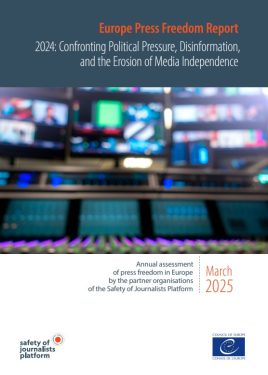 The report identifies digital surveillance of journalists and the risks it poses to the confidentiality of sources as “serious threats”, in addition to the growing threat of transnational repression against journalists, particularly by Russia and Belarus, with governments in some countries increasingly targeting media outlets and journalists. The report warns against the “growing threat of disinformation, including AI-generated content and state-controlled propaganda, aimed at manipulating public opinion”.
The Council of Europe has therefore reiterated its call for governments and institutions to “support press freedom through far-reaching legislative and practical reforms, transparency and increased protection against threats and harassment.”
In 2024, there were 266 reported incidents of physical attacks, intimidation, arrests, impunity and other restrictive measures against war reporters.
Unsurprisingly, Ukraine (40), Russia (32), Turkey (28), Serbia (20) and Georgia (18) were among the countries with the highest number of reports.
Violence against journalists and attacks on freedom of expression have escalated dramatically in those European countries (although the situation may be even worse outside Europe). The report mentions specific cases, giving the full names of journalists who have been killed, arrested or threatened simply for reporting on the horrors of war. Other cases relate to political events, media coverage of elections, reports on human rights violations…
Amidst the suppression of information, the manipulation and conditioning of public opinion to support conflicts and abuses (Russia currently tops the list), wars and violence remain unforgivable evils.